Tree Trimming & Pruning in Greenville, SC
Tree trimming in Greenville, SC fixes branches on the roof, limbs over the driveway, and a crown so thick it shades out the whole lawn, without butchering the tree. Free estimates across Greenville County.
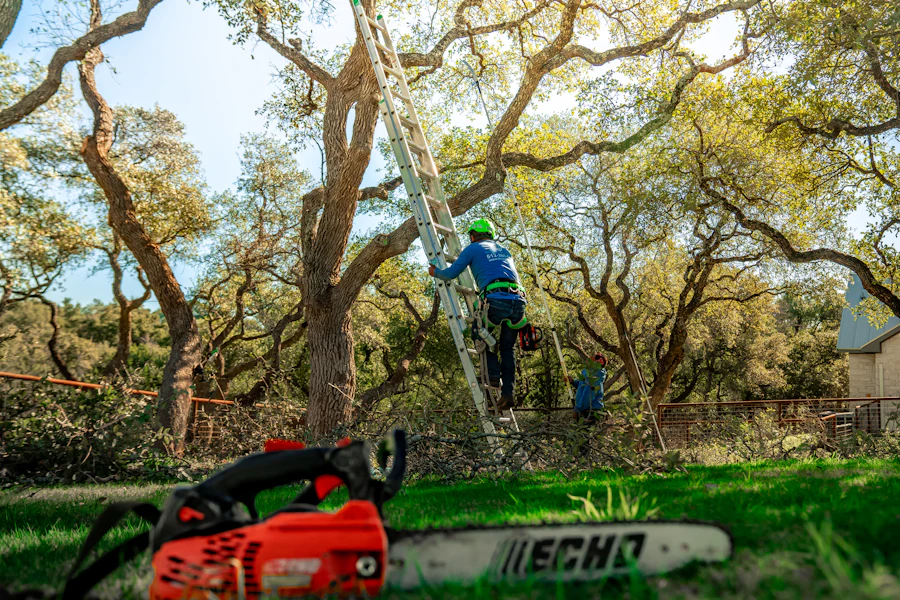
Trimming that helps the tree — not "topping" that ruins it
Drive through any older Greenville neighborhood and you'll see the aftermath of bad tree work: oaks and maples "topped" into knuckly stubs that regrow into weakly-attached water sprouts — uglier, more storm-prone, and shorter-lived than before the cut. Proper pruning removes the right limbs at the right points instead:
- Roofline & structure clearance — limbs cut back to healthy laterals so gutters stop filling and squirrels lose their bridge to your attic.
- Crown thinning — selective interior cuts that let wind pass through a big oak instead of pushing on it like a sail. Real storm protection for the Upstate's thunderstorm season.
- Deadwooding — removing dead limbs before they become the "widow-makers" that drop on driveways, trampolines, and parked cars.
- Crown raising — lifting low canopies over lawns, sidewalks, and driveways for mowers, visibility, and headroom.
- Structural pruning of young trees — ten minutes of smart cuts on a young maple prevents the co-dominant stems that split apart at year twenty.
What trimming costs in the Greenville area
| Job type | Typical price |
|---|---|
| Small tree shaping / ornamental pruning | $150 – $400 |
| Medium tree trim (roofline clearance, deadwooding) | $300 – $700 |
| Large mature oak or pine — full crown work | $600 – $1,500+ |
Multiple trees on one visit almost always price better per tree — most of the cost is getting a crew and equipment on site. The same visit can take in bush and shrub trimming across Greenville, too.
When to prune in the Upstate
Winter (December–February) is prime time for most hardwoods: trees are dormant, structure is visible without leaves, disease pressure is low, and crews have more schedule room. Oaks especially benefit from dormant-season pruning, which avoids the beetles that spread oak wilt in warm months. Exceptions worth knowing: spring bloomers like dogwoods and cherries get shaped right after flowering, and dead or hazardous limbs should come off whenever you notice them — hazard work doesn't wait for a season. Species by species, the Greenville pruning calendar lays out which month suits which tree.
Trimming or removal?
The usual question is "Can this tree be saved?" Often yes — a stressed tree with a live crown can frequently be pruned, mulched, and monitored instead of removed. A sound tree with one weak fork is a different case — tree cabling and bracing in Greenville holds the union instead of cutting it out. But a tree with root rot, major trunk decay, or a worsening lean is past what pruning fixes, and putting money into trimming it is throwing good money after bad. If that's the case, a straight estimate says so plainly and quotes a Greenville tree removal instead. Either way the assessment is free — (864) 501-0549.
What the trimming estimate needs to say
A trimming price is only as useful as the description written beside it. Before agreeing to one, check that the estimate names:
- Which trees and which limbs. "Trim the oak" can mean an hour or a whole day up in the canopy. The sheet should say roofline clearance, a thinning, a raise over the driveway, deadwood, or some mix of those.
- How much live crown comes off. A careful thinning removes a modest share of the leaves. A promise to "cut it way back" is topping under another name.
Getting the yard ready before trimming day
Move cars out from under the canopy, and off the driveway if the chipper needs that space. Bring in patio furniture and planters below the limbs being cut. Unlock the side gate, keep dogs indoors, and flag sprinkler heads, landscape lights or a septic lid near the trees so no one drags a heavy limb across them.
Where the cut limbs end up
Brush from a trim normally goes through a chipper in the street and leaves as chips, while thicker limbs are cut into lengths that can be carried out. If you would like the bigger pieces left for a fire pit, or a pile of chips kept back for your beds, ask before the first cut; keeping the wood from a trim or removal explains what that request usually involves.
Tree trimming questions from Greenville yards
What is the difference between tree trimming and topping?
Can more than one tree be trimmed on the same visit?
Should I cut a branch that is touching a power line myself?
Book a free trimming estimate
Serving Greenville, Greer, Mauldin, Simpsonville, Taylors & Easley.
Call (864) 501-0549